
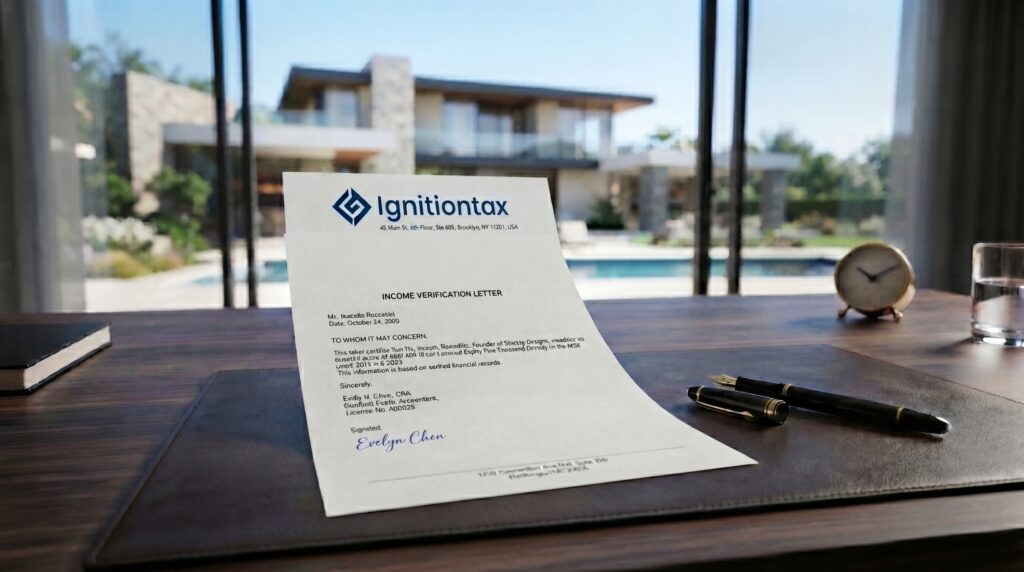
Jumbo loans sit outside the limits set for conforming mortgages, which means they aren’t backed by Fannie Mae or Freddie Mac and carry more of the risk on the lender’s own books. That changes how carefully a file gets reviewed. For a self-employed borrower, it usually means more documentation, more scrutiny of business income, and often a request the borrower didn’t expect: a letter from their CPA.
A CPA letter gives the underwriter independent, professional confirmation of the facts behind a business — that it exists, who owns it, how long it has operated, and what its financial records actually show. On a jumbo file, it also frequently addresses a question unique to large loans: whether taking a substantial amount of cash out of the business for a down payment will affect the business itself.
Why Jumbo Loans Trigger Extra Documentation
A jumbo loan exceeds the conforming loan limit set each year by the Federal Housing Finance Agency. Because these loans can’t be sold through the usual agency channels, lenders set their own standards — and those standards are typically stricter than conforming guidelines.
Requirements are set differently on agency-backed files — see what lenders expect for a conventional mortgage CPA letter.
For self-employed borrowers, that generally means:
- Higher credit and reserve expectations
- More months of documented income history
- Closer review of business financials, not just personal returns
- Greater attention to whether income is stable enough to support a large balance
Under most lender guidelines, a borrower is treated as self-employed if they own 25% or more of a business, or earn substantial income as a sole proprietor, partner, or independent contractor. A CPA letter is often where the underwriter looks for a clear, professional summary of that picture.
The same standards apply to any CPA letter for self-employed borrowers, regardless of loan size.
The Question Unique to Jumbo Files: Down-Payment Liquidity
Jumbo loans usually require a larger down payment in real dollars than conforming loans. When a self-employed borrower funds that down payment from business accounts, the underwriter has a legitimate concern: does pulling that much cash out leave the business able to keep operating?
This is where a CPA letter carries weight on a jumbo file. A CPA who knows the business’s records can factually address whether a withdrawal of that size is consistent with how the business has operated — without predicting the future or guaranteeing anything. It’s one of the most common reasons jumbo lenders ask for CPA involvement, and it’s a question that rarely comes up on smaller loans.
Why Tax Returns Alone Often Aren’t Enough
Tax returns are historical. On a large loan, an underwriter is trying to understand a business’s current financial health, and returns filed months ago may not reflect where the business stands today. Year-to-date profit-and-loss statements help close that gap, and a CPA letter can confirm the records those statements were drawn from — bridging the distance between last year’s filings and this year’s cash flow.
When a lender’s default expense assumption understates real earnings, a CPA expense ratio letter for bank statement loans can document the business’s actual operating percentage.
When a Jumbo Underwriter May Request a CPA Letter
- To confirm business existence, ownership percentage, and entity type
- To verify how long the borrower has been self-employed
- To confirm the CPA prepared or reviewed the borrower’s tax filings
- To address whether a large down-payment withdrawal affects business operations
- To clarify a year-over-year change in business income
- To support the income figure used when reserves and debt-to-income are calculated
What a CPA Letter Can — and Cannot — Say
Professional standards set clear limits, and they apply no matter how large the loan is.
A compliant letter CAN confirm:
- Length of self-employment and entity structure
- Ownership percentage
- That the CPA prepared or reviewed the borrower’s tax filings
- Historical revenue and financial patterns drawn from reviewed records
- Factual observations about the business’s operating history
It CANNOT:
- Guarantee future income or continued business success
- State that the borrower is “financially sound” as an opinion
- Promise the borrower’s ability to repay the loan
- Speculate beyond what the records support
Under AICPA guidance, CPAs can state facts matching prepared tax forms and active bookkeeping records — not predictions. A well-written letter is factual, sourced, and free of guarantees.
Key Elements a Jumbo-Ready CPA Letter Should Include
- CPA credentials — name, license number, firm, and contact details on letterhead
- Borrower and business details — legal name, entity type, ownership percentage, years in business
- Documented basis — the records the CPA relied on (returns, P&L, balance sheet, bookkeeping)
- Income health — gross and net figures or year-to-date profit consistency, stated factually
- Liquidity observation, where requested — a factual statement addressing the effect of a large withdrawal, without guarantees
- Professional-standards language — clear that the letter is non-attest and not a financial guarantee
Documentation Jumbo Lenders Typically Require Alongside the Letter
A CPA letter supports the file; it doesn’t replace anything. Self-employed jumbo borrowers should still expect to provide personal and business tax returns, year-to-date profit-and-loss statements, business bank statements, proof of reserves, and business formation documents. The CPA letter ties these together and gives the underwriter a professional reference point.
When a CPA Letter Helps Most on a Jumbo Loan
- The down payment is being funded from business accounts
- Business income varies year to year
- The borrower owns multiple businesses or complex entities
- Tax returns understate current cash flow
- The lender needs added confidence in the income supporting a large balance