A lease can move fast.
A landlord may ask for proof of income on the same day you tour.
A property management company may want a complete rental package before they even open the file.
That is where a CPA income verification letter for apartment lease can help.
It gives the decision-maker a clear income summary tied to real records.
This article explains what landlords and management companies typically ask for, what documents support the letter, and how to avoid common rejection points.
It also explains how this differs from a CPA income verification letter for mortgage, since lenders and landlords often use similar terms but apply them differently.
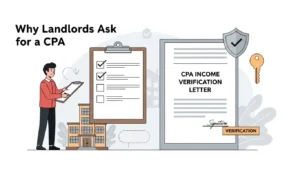
Why Landlords Ask for a CPA Income Verification Letter
The rental application process is designed to confirm you can pay rent on time.
A landlord may accept pay stubs and W-2 forms.
But when income is variable, a verification letter can reduce questions.
Common situations include:
- You are self-employed
- You are paid on 1099
- You have multiple income sources
- Your pay stubs do not reflect your typical income
- You are applying with business income records
A CPA letter can make the file easier to review.
It can also reduce back-and-forth when the building has strict screening steps.
What a Property Management Company Usually Reviews
Property management companies often follow internal checklists.
They want documents that match a defined income period.
They also look for consistent names, consistent dates, and readable totals.
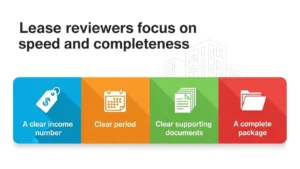
The three things reviewers look for first
- Identity match across documents
- Income period clarity
- Proof of income that supports the stated number
If these are unclear, your application can slow down.
Or it can be placed on hold while you provide more items.
What “Proof of Income” Means for a Lease File
“Proof of income” can mean different things depending on your income type.
For W-2 employees
Most landlords ask for:
- Recent pay stubs
- W-2 for the most recent year
- Tax returns in some cases
Pay stubs show current pay.
W-2 shows yearly wages.
Tax returns can confirm the story if the landlord asks for more documentation.
For self-employed applicants
A landlord may not have an employer letter to rely on.
They may ask for:
- Tax returns
- Bank statements
- Profit and loss statement(P&L)
- 1099 forms, if applicable
- Schedule C, if you file as a sole proprietor
In these files, a CPA letter often helps because it ties documents together.
CPA Income Verification Letter for Apartment Lease vs Other Letters
Landlords may use different terms.
It helps to understand what each one usually means.
Verification of income letter
A verification of income letter is a broad term.
It can come from an employer, a CPA, or another source.
The key is whether it is backed by income verification documents.
Employment and income verification letter
This is commonly requested when the landlord wants both:
- Proof that you work, and
- Proof of how much you earn
If you are self-employed, “employment verification” may not apply in the usual way.
In that case, the focus is often on income verification and business activity records.
CPA income verification letter for mortgage
This is usually built for a mortgage lender and an underwriter.
Mortgage files often have more strict loan application requirements.
They may ask for additional items and specific wording.
A lease file can still be strict.
But the decision process is different.
A landlord is usually evaluating rent payment risk, not underwriting a loan.
What a CPA Income Verification Letter for Apartment Lease Should Include
A strong letter is simple and clear.
It should help the reviewer verify income without guessing.
Core components most landlords expect
- CPA letterhead
- Date
- Recipient line, when provided
- Client name
- Income period covered
- Income type summary
- List of documents reviewed
- CPA signature
The “income period” matters.
Landlords often want the most recent year and current earnings evidence.
Some want a defined date range.
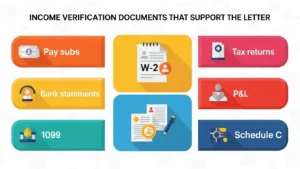
Income Verification Documents That Support the Letter
A CPA letter is only as credible as the file behind it.
Provide clean documents that match the income period.
Pay stubs
Pay stubs support current wages.
They also show pay frequency.
What landlords check
- Name matches the application
- Employer name
- Year-to-date(YTD) totals, when shown
- Consistency of pay
W-2
W-2 supports annual wages.
It gives a clear year summary.
What landlords check
- Year matches the stated income period
- Name matches pay stubs
- No missing pages
Tax returns
Tax returns provide the most complete picture of reported income.
What landlords may focus on
- Total income
- Self-employed income reporting
- Schedule C, when relevant
- Consistency with bank statements, when requested
Bank statements
Bank statements are sometimes requested to confirm deposits or balances.
They do not equal taxable income.
But they can support cash flow and stability.
What property management may check
- Name match
- Consistent deposits
- Time period alignment
Profit and loss statement (P&L)
A P&L is common in self-employed rental applications.
It shows revenue and expenses for a period.
Why landlords request a P&L
- They want a current-period view
- They want a simple summary of business income
1099 and Schedule C
If you earn 1099 income, the 1099 forms and Schedule C can help show how it is reported.
Where these usually fit
- 1099 supports gross payments
- Schedule C shows business income and expenses
- Tax returns tie the story together
Common Reasons Lease Letters Get Rejected
Most rejections are not about the idea of a CPA letter.
They are about the details.
Missing income period
If the letter does not state the income period, the reviewer cannot match it to the file.
No list of documents reviewed
Property management teams want to know what supports the number.
The letter reads like a guarantee
Landlords may reject letters that claim income is “guaranteed” or “will continue.”
A CPA letter should stay within professional standards.
Name or dates do not match
If pay stubs show one name format and the letter uses another, it can trigger a hold.
Self-employed income is not supported
If a letter references income but the file does not include tax returns or a P&L, the landlord may request more documents.
How to Prepare a Clean Lease Package
A clean package reduces the number of follow-ups.
It also speeds up the rental application process.
Step-by-step preparation
Step 1: Confirm what the landlord wants
Ask for the checklist.
Some buildings have a standard list.
Step 2: Match the income period
If the landlord wants the last 12 months, gather those items.
If they want the last tax year, use that year.
Step 3: Organize documents in a simple order
Use a consistent order:
- CPA letter
- Pay stubs or income reports
- W-2 or 1099
- Tax returns
- P&L
- Bank statements, if required
Step 4: Check basic consistency
- Names match
- Dates match
- Pages are complete
- Totals are readable
Special Notes for Self-Employed and 1099 Applicants
Self-employed files are common.
They also get more questions.
What landlords usually want to confirm
- You have ongoing work or business activity
- Your income is supported by records
- Your income period is clear
Practical ways to reduce questions
- Provide tax returns and a current P&L
- Provide bank statements only if required
- Keep the CPA letter clear and limited to reviewed documents
A CPA firm should avoid overstating certainty.
The letter should reflect what was reviewed.
How This Differs From a CPA Income Verification Letter for Mortgage
It helps to understand the difference.
Mortgage lenders underwrite debt risk.
Landlords screen for rent payment risk.
Mortgage underwriters often request more documentation
A mortgage lender may ask for:
- More detailed tax return analysis
- Additional conditions
- Specific phrasing tied to loan application requirements